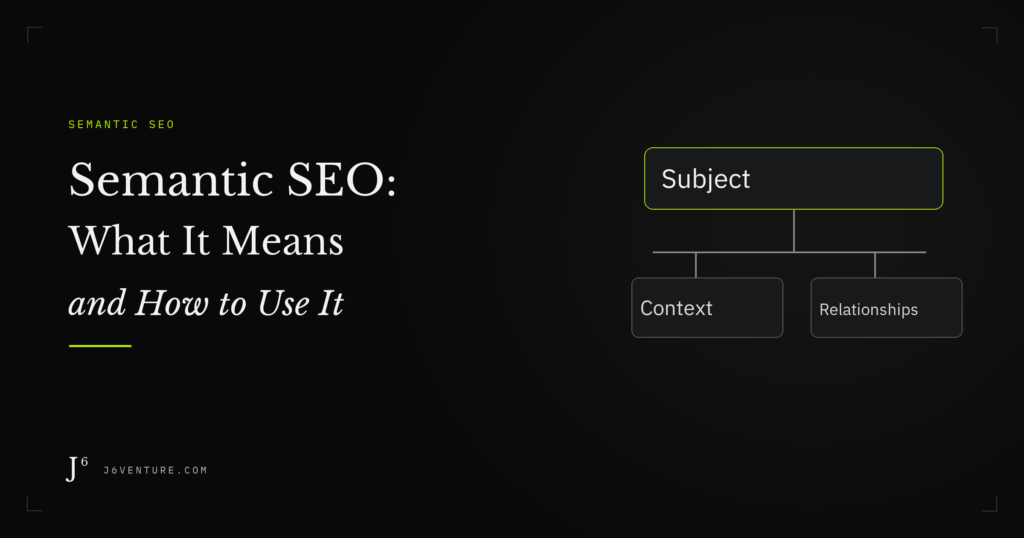
Semantic SEO is the practice of making content’s subject, context, and relationships clear so it can serve relevant searches. It involves useful explanations, connected information, descriptive links, and appropriate structured data. To apply it to an existing page, find what readers still have to infer, verify the missing detail, and make that connection explicit.
A page can contain every expected term and still leave a reader unable to answer a basic question. What does this feature do? When does this charge apply? Which part of this advice comes from evidence?
For this page-level work, use one principle: reduce what the reader has to infer.
The useful editing question is: what can someone understand after this change that they could not understand before? That gives you a reason to add a detail, rewrite a sentence, or leave a suggested keyword out.
What Is Semantic SEO?
Semantic SEO focuses on meaning and relevance across content. On a page, that includes identifying the subject, explaining connections, and answering the reader’s question in context. Across a site, it can also involve related pages, internal links, and structured data that describes the content.
The term covers a collection of practices. It is not a named Google ranking system or a setting you switch on. This article focuses on the part you can work on directly: the information your page communicates.
Good writing makes an explanation clear. Semantic SEO applies that clarity to a page’s search question, relevant concepts, connections to other pages, and appropriate machine-readable descriptions. A clearer paragraph still needs to answer the question the searcher came with.
How Semantic SEO Relates to Semantic Search
Semantic search concerns how a search system interprets meaning in a query and content. Semantic SEO concerns the publisher’s work to make that content relevant and understandable.
Google’s ranking systems guide describes BERT as helping it understand combinations of words and their intent, and neural matching as connecting concepts in queries and pages. These descriptions explain the background. They do not prescribe a writing formula for either system.
Where Keywords Still Fit
Keywords help you identify the language people use and the question you need to answer. A useful product name or technical term should remain explicit. Semantic SEO gives you a reason to explain how those terms connect.
Google’s SEO Starter Guide says its language matching can relate a page to queries without every wording variation appearing in the copy. There is no need to insert a list of synonyms or phrases labeled “LSI keywords” into otherwise complete copy.
If your decision is which searches belong on one URL, use our guide to keywords and page focus. Here, the page already has a job; we are improving how it answers.
What Gives a Page Meaning?
A useful way to inspect meaning is to look for the subject, the relationships that explain it, and the conditions that affect the answer. This is an editorial model you can apply to a passage. It helps expose missing information without pretending to measure Google’s understanding.
The Subject: What Are We Talking About?
Name the product, organization, person, place, or concept the passage concerns. In semantic SEO, these identifiable things are called entities. An attribute describes a property of one of them, such as a subscription’s price or a channel’s visibility.
A page can discuss several entities. The reader needs to distinguish them: the company, its product, a feature within that product, and the customer using it. Repeated references to “the platform” can become unclear when a passage introduces an integration with another platform.
A suggested entity earns its place when it makes the explanation clearer or more accurate. Inserting extra brands and nouns to satisfy a tool’s list can leave the original ambiguity untouched.
Relationships: How Do the Details Connect?
A relationship explains what one thing does, contains, changes, or depends on. Slack’s channels page connects channels with discussions and file sharing. Stripe connects a subscription change with an adjustment for part of a billing period.
The explanatory work happens in those connections. Mentioning a product, a customer, and an invoice leaves the reader to determine who pays what. Stating what creates the charge answers a question.
Use this check to find missing connections. Forcing every sentence into a subject-verb-object template can make the copy mechanical; explain the relationships the question requires in natural language.
Context and Conditions: When Does the Answer Apply?
Conditions can change an otherwise accurate answer. A price may apply to a monthly plan. An action may require an administrator’s approval. A credit may exist without being automatically refunded.
Put the condition beside the claim it qualifies. If a reader could make a different decision after learning it, the condition belongs in the explanation rather than in a distant footnote.
Two Public Examples of Semantic SEO in Practice
Public pages make these principles visible. Slack shows how a feature connects to a use; Stripe shows how amounts, timing, and exceptions connect. These are our annotations of published content, checked October 9, 2026. They illustrate communication choices, with no claim about either company’s optimization process or ranking results.
How a Product Page Connects Features to Their Uses
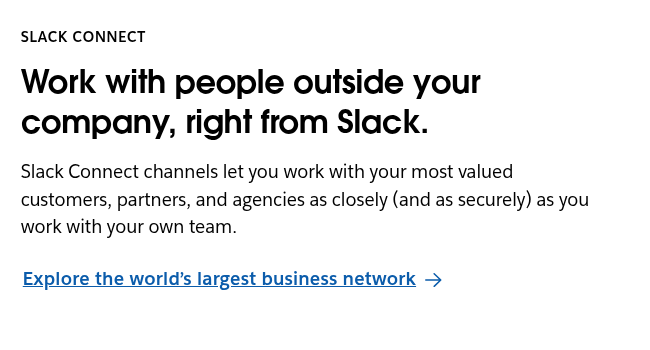
Slack’s channels product page describes channels as spaces where people can discuss projects and share files. Its Slack Connect section explains collaboration with people outside the company. The FAQ adds that sending or accepting invitations may require administrator approval, depending on the companies’ settings.
What the Slack Example Communicates
| Element | Information on the Page | What the Reader Learns |
|---|---|---|
| Subject | Channels within Slack | Which part of the product the explanation concerns. |
| Relationship | Channels support project discussion and file sharing. | How the feature connects to an activity. |
| Context | Slack Connect supports working with people outside the company. | How the use extends to an external relationship. |
| Condition | Administrator approval may be required for invitations. | What to check before expecting the invitation to proceed. |
Slack connects the feature to a task and identifies a possible approval step. A reader can see both what the feature enables and what they may need to check.
How Stripe Explains Prorations Through Amounts, Timing, and Exceptions
Stripe’s proration documentation uses a subscription upgrade halfway through a monthly billing period. In its example, the customer moves from a $10 plan to a $20 plan. The unused half of the original plan produces a $5 credit; the remaining half of the new plan costs $10. The net adjustment is $5.
The documentation then makes a useful distinction: negative prorations are not automatically refunded, and positive prorations are not immediately billed, although either can be handled manually. Calculating the adjustment and collecting or refunding money are separate actions.
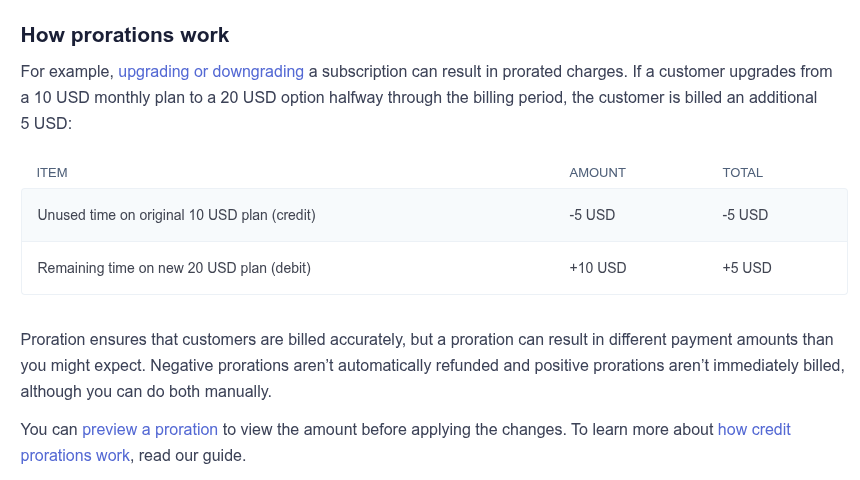
This is what useful depth looks like. Knowing the plan prices alone cannot explain the adjustment. The timing supplies the calculation context; the billing qualification prevents a reader from equating an adjustment with an immediate payment. The example’s amounts illustrate that particular change, rather than a universal rule for every subscription.
How to Apply Semantic SEO to an Existing Page
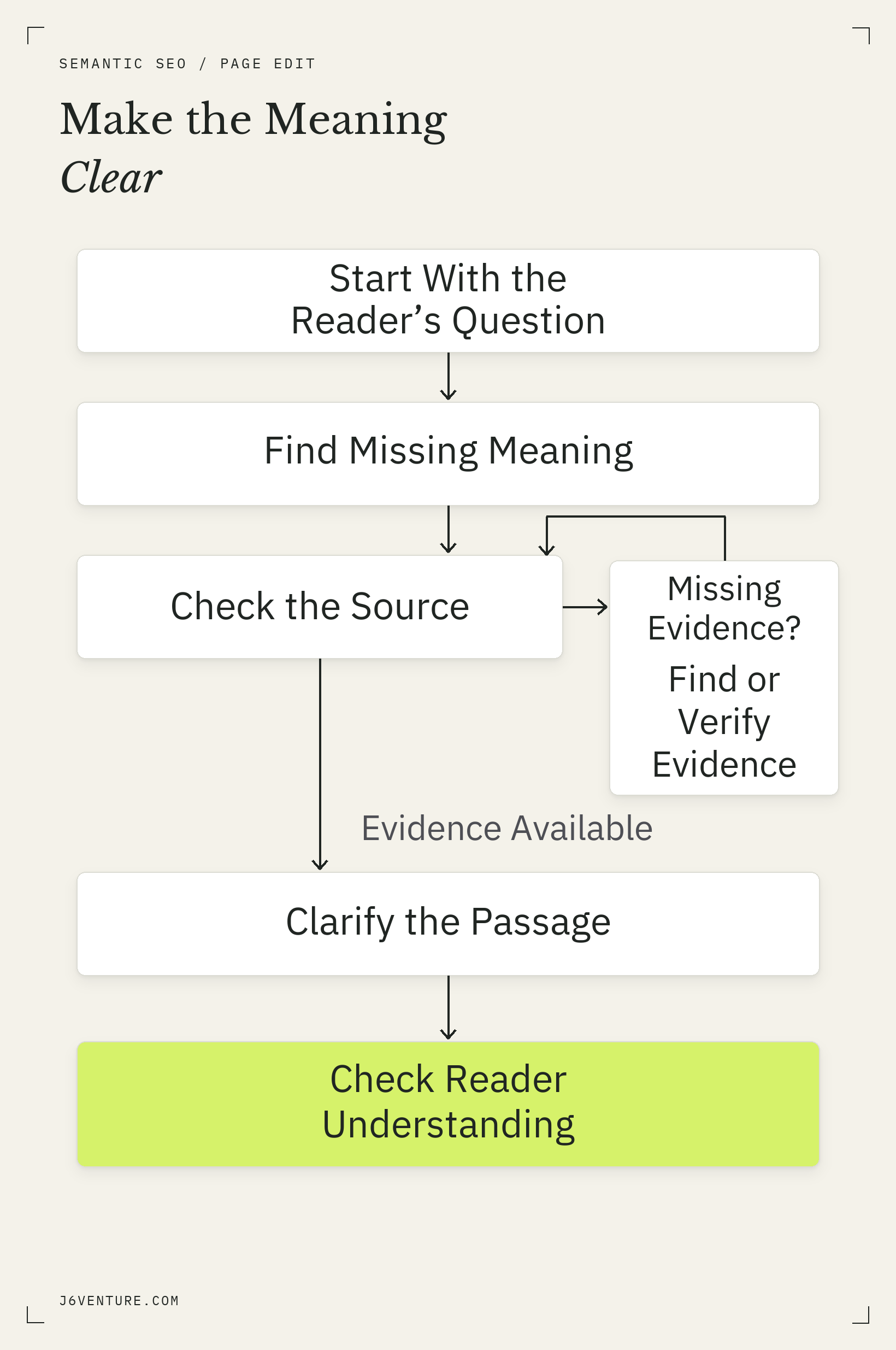
Start with the reader’s question, identify the information the passage leaves unclear, and check the source before rewriting. Then compare what the original and revised versions let someone understand. The following walkthrough uses a passage from J6’s existing Semantic SEO article and a proposed replacement.
Start With the Question the Page Must Answer
For this passage, the question is: how does Google interpret meaning, and what does that imply for my writing? A useful answer needs enough technical context to explain the editing advice without presenting a speculative description of Google’s internal process.
On your own page, write the reader’s question in one sentence before editing. For a feature section, it might already be expressed by the customer question the section answers. Keep that question beside the source material so added detail has a clear purpose.
Find What the Reader Still Has to Guess
This was the original public passage, retained before the rewrite:
Google says Google Search tries to understand language and query context, which is why semantic search depends on more than exact wording. At a high level, search engines use natural language and natural language processing to interpret what a search likely means, map that meaning to concepts or entities, and use the knowledge graph to connect people, places, things, and ideas through relationships. That does not reveal a fixed internal ranking pipeline, and Google does not publish one.
The original already names Google and warns against assuming a fixed pipeline. Keep that caveat. The opportunity is to show what the advice looks like in a piece of writing.
The earlier article also recommended clear naming and relevant context. A worked example would make those recommendations easier to apply.
Check the Evidence Before Adding Detail
Google’s ranking systems guide describes BERT and neural matching separately. We can name those roles while keeping the original caveat about a fixed sequence. The Starter Guide supports clear, helpful writing and explains that every query variation need not appear in the copy.
Stripe then gives us something to demonstrate: how the time remaining in a billing period affects an adjustment.


Compare the Original Passage With a Proposed Rewrite
Proposed Replacement
Google describes several systems that help it connect language with meaning. BERT helps interpret combinations of words and their intent; neural matching connects concepts in queries and pages. These descriptions do not establish a fixed processing sequence.
A practical editing check is whether the page explains the connection its reader came to understand. In Stripe’s example, that connection is between the time left in the billing period and the adjusted charge. Naming the two plan prices alone leaves that question unanswered.
The rewrite keeps the caveat and makes the advice usable. Compare both versions against the reader’s question.
Explain What Each Change Helps the Reader Understand
Why the Proposed Edit Is More Useful
| Change | Reason | Reader Benefit |
|---|---|---|
| Name BERT and neural matching with their documented roles. | The source describes those capabilities individually. | The explanation becomes more specific and traceable. |
| Retain the caution about a fixed sequence. | The original already included this qualification. | The more concrete explanation preserves the same limit. |
| State the editorial action separately. | The technical description and our recommendation do different jobs. | The reader knows what to inspect in a passage. |
| Add the Stripe comparison. | The verified public example connects timing with the adjusted charge. | The reader sees the relationship a useful explanation must make clear. |
Apply the same reasoning to your subject: find the unclear claim, check the evidence, and explain why the revision helps. You might add a condition, clarify a reference, or remove an explanation you cannot support. The passage may become shorter.
Which Details Should You Add, Clarify, or Remove?
Judge a suggested detail by whether it helps answer the page’s existing question. It should explain a connection, supply a condition that changes the answer, or resolve a likely misunderstanding.
Choose the Edit the Passage Needs
- Add information needed to answer the question.
- Clarify a connection the reader has to guess.
- Remove repetition or irrelevant detail.
- Verify a claim before relying on it.
Four Decisions Applied to the J6 Passage
| Decision | What We Would Change or Check | Why |
|---|---|---|
| Add | The documented roles of BERT and neural matching. | Named capabilities make the broad explanation concrete. |
| Clarify | Connect the editing advice to Stripe’s timing and adjusted charge. | The reader can see what an explanatory relationship looks like. |
| Remove | The long list of entity categories from this passage. | Those categories are already explained earlier; the space can serve the application. |
| Verify | Any future claim that the rewrite improves rankings. | The proposed edit has no measured search result. |
Add Information That Changes the Answer
In the Stripe example, the point within the billing period changes the calculation. The distinction between an adjustment and immediate billing changes what the reader should expect next. Those details earn their space.
A term’s appearance in a content tool is a prompt to investigate. Before inserting it, finish this sentence: “The reader needs this detail to understand…” If the only reason is that competing pages mention it, you have more research to do.
Clarify Relationships and Missing Conditions
Slack’s invitation explanation connects approval to the companies’ settings. The reader knows what to check. In J6’s proposed replacement, the named system descriptions and separate editing recommendation tell the reader how to interpret each statement.
Look for unclear pronouns, unexplained comparisons, and claims whose conditions appear elsewhere. A precise subject or a short qualifying clause may do more work than another subsection.
Remove Repetition and Irrelevant Detail
Remove a sentence when the reader loses no necessary explanation, evidence, or qualification without it. In our walkthrough, the list of people, places, things, and ideas repeats categories already explained earlier. The proposed replacement uses that space to connect documented capabilities with an editing example.
This is also a stopping rule: when the reader can answer the page’s question accurately, further adjacent material needs its own justification. Keep deeper implementation on an appropriate linked page.
Verify Claims You Cannot Yet Support
An unsupported detail remains a research task. We checked the named systems against Google’s documentation and kept the original caveat. Any claim about ranking improvements would need separate evidence after publication.
For product copy, use the vendor’s current documentation and preserve restrictions. For your own experience, retain the observation and its date. If you cannot establish a material claim, leave it out or explain the uncertainty that matters to the reader.
How Headings, Internal Links, and Structured Data Support Meaning
Headings organize an explanation, links connect it to useful supporting material, and structured data describes applicable page content in a machine-readable format. Each has a role. None supplies the missing reasoning in a vague or unsupported passage.
Use Headings That Explain the Section
A heading should help readers predict the answer beneath it. Stripe’s headings distinguish how prorations work, what triggers them, and what does not. Those are useful differences within one topic.
Check that a heading’s scope matches its section. If a heading promises exceptions, the text must explain the relevant exceptions. Repeating the primary keyword in every heading cannot provide that missing coverage.
Link Where the Reader Needs More Detail
Use a link when the next question needs more depth than the current page should carry. The destination should deliver what the surrounding sentence and anchor promise. Google recommends descriptive, concise, relevant link text, with context around it.
This article links to keyword selection where page allocation becomes relevant. If you need to place this editing work within a broader search plan, our organic SEO guide addresses that wider decision.
Keep Structured Data Consistent With the Visible Page
Make the visible explanation useful first. Then use applicable structured data to describe it. Google’s structured data guidelines require an accurate description of visible content. Choose supported types and follow their requirements.
Google says a page must be indexed and eligible to appear in Search with a snippet to be eligible as a supporting link in AI Overviews or AI Mode. Its AI features guidance sets no additional technical requirements. Special schema is therefore not an entry requirement for these features. Appropriate structured data can describe the page; this editing method does not promise an AI citation.
How to Check Whether Your Changes Helped
Check clarity first; measure search impact separately. You can inspect whether a revised passage answers its question accurately as soon as it is written. Search performance requires observation after publication, and movement alone cannot isolate the effect of a semantic edit.
Check the Reader’s Understanding
Ask someone unfamiliar with the revision to explain the subject, the relevant relationship, and any condition that changes the answer. Keep the source available to check their interpretation.
For the Stripe example, useful checks are whether they can explain the $5 adjustment and whether they expect it to be billed immediately. For our rewritten paragraph, ask which statements describe Google’s systems and which suggest an editing action. A correct answer is evidence that this reader understood the passage.
Review Relevant Search Queries Without Assuming Causation
Record what changed and when it went live. In Search Console, filter to the page and inspect queries related to the question the edit was meant to resolve. Sitewide traffic cannot isolate that question. Compare equivalent periods and account for other changes, including indexing, demand, and site updates.
A rise in impressions for unrelated searches tells you little about success against the intended question. Relevant query movement is useful evidence, but assigning it to one edit requires more than a before-and-after chart. Our guide to judging SEO progress over time explains when to wait, investigate a blockage, or change approach.
Your First Semantic SEO Edit
Choose one passage on an existing page where the reader still has to guess a relationship or condition. Verify the missing information, make the smallest useful change, and ask someone to explain the answer back to you.
Keep a short note of the original wording, the source, and what the revision helps the reader understand. That record gives you a concrete basis for improving the next passage and for reviewing search progress later.
Your first task: find one unanswered connection and make it clear.
If the reader already understands the relationship, leave out additional terms that serve no reader need.